
Why maintenance tracking fails with CMMS and spreadsheets
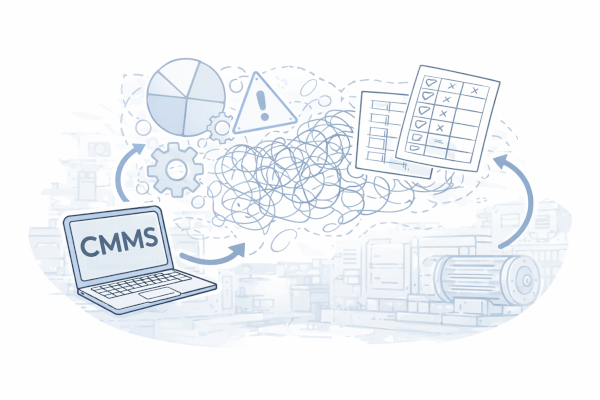
Maintenance tracking often fails in small teams using CMMS tools and spreadsheets due to complexity lost context and inconsistent follow through
12/9/20252 min read
When maintenance starts breaking down, most teams reach for tools.
Spreadsheets.
Shared folders.
Maintenance software.
Custom systems someone built years ago.
On paper, these solutions make sense. They promise structure, visibility, and control.
In practice, many small teams abandon them quietly.
Not because the tools are bad, but because they do not fit how work actually happens.
The discipline gap no one plans for
Almost every maintenance system assumes one thing.
Consistency.
Someone has to log every fix.
Someone has to update every change.
Someone has to remember to document decisions while things are busy.
In real environments, that consistency erodes fast.
People get pulled into urgent work.
The fix happens after hours.
The note gets skipped because everyone just wants to go home.
Nothing breaks immediately.
So no one notices the gap.
Until months later, when the same issue comes back and no one remembers what happened last time.
Why spreadsheets feel easy at first
Spreadsheets are often the first choice because they feel lightweight.
They are familiar.
They are flexible.
They do not require training.
At the beginning, they work.
But over time, they grow brittle.
Tabs multiply.
Notes get inconsistent.
Dates mean different things to different people.
Eventually, only one person really understands how it is supposed to work. When that person is away, the system stalls.
The spreadsheet does not fail loudly. It fades into irrelevance.
Why heavy systems feel like too much
On the other end of the spectrum are full maintenance platforms.
These tools can be powerful, but they come with overhead.
Setup takes time.
Workflows need agreement.
Training becomes mandatory.
For small teams, this often feels like adding a second job.
Instead of reducing friction, the system becomes something people work around. Updates get skipped. Shortcuts appear. Trust in the data erodes.
Once trust is gone, the system stops being used.
The real pattern underneath
Whether the tool is simple or complex, the failure pattern is the same.
The system depends on perfect follow through.
Perfect follow through depends on people.
People are not perfect.
When the system breaks, teams do not blame the tool. They blame themselves. They assume they just need to be more disciplined.
That belief keeps the cycle going.
What small teams actually need
Most small teams do not need scheduling engines or complex workflows.
They need continuity.
They need a place where basic maintenance history lives without effort. A record that survives busy weeks, staff changes, and forgotten updates.
When history is easy to save and easy to find, people use it naturally. Not because they are forced to, but because it helps them do their job.
That is the gap most tools miss.
Choosing tools that match reality
The best maintenance system is the one that still works when people are tired.
The one that does not punish missed updates.
The one that captures context without friction.
The one that makes memory durable instead of fragile.
For many teams, starting smaller actually creates more stability.
You can always add complexity later.
You cannot recover history that was never saved.
Before adding any new tools, it helps to get clear on the basic things that need to be tracked consistently.